Guide contents
The main difference is the job: a cutting disc separates metal, a grinding disc removes excess material, and a flap disc grinds, blends and finishes according to its construction and grit. Choosing the correct type is the starting point, not a replacement for checking material and machine compatibility.
| Disc | Main job | What to confirm |
|---|---|---|
| Cutting disc | Main jobSeparate a section of metal. | What to confirmMaterial, diameter, thickness, bore and maximum speed. |
| Grinding disc | Main jobRemove excess metal and work the surface. | What to confirmPermitted application, wheel shape and tool compatibility. |
| Flap disc | Main jobGrind, blend and finish according to product and grit. | What to confirmGrit, approved material and required surface finish. |
When do you need a cutting disc?
When separating a section, sheet or tube, look for a disc approved for that material and machine. Check the specification rather than relying on a generic “metal disc” description. A cut-off wheel not rated for side grinding must not be used to remove weld excess; changing how it is used is not a substitute for selecting the correct product.
When should you choose a grinding disc?
A grinding disc is a candidate for removing excess metal or working a surface within its specified applications. Tell the supplier whether you are removing weld excess, preparing an edge or doing another job. Do not assume every grinding disc is approved for cutting, or that diameter alone identifies a compatible machine.
When should you choose a flap disc?
For grinding, blending or finishing, check the flap disc construction, grit and approved material. No single grade suits every stage. State whether you need stock removal, blending of grinding marks or surface preparation, and evaluate the result under the workshop’s procedure before standardising a new selection for a large order.
Example: consumables for a welded fabrication
The work may include cutting stock before assembly, removing excess after welding and then blending the surface. Separate cutting, grinding and finishing needs in the enquiry and identify the material and machine for each stage. Quantities need not be equal; base them on actual workshop consumption.
Mistakes that make a purchase request unclear
- Requesting an “angle grinder disc” without naming the operation.
- Providing diameter but omitting material, bore and speed requirements.
- Requesting a replacement from a photo with an unreadable label.
- Comparing pack prices without confirming the piece count.
HAMETAL product families for cutting, grinding and finishing
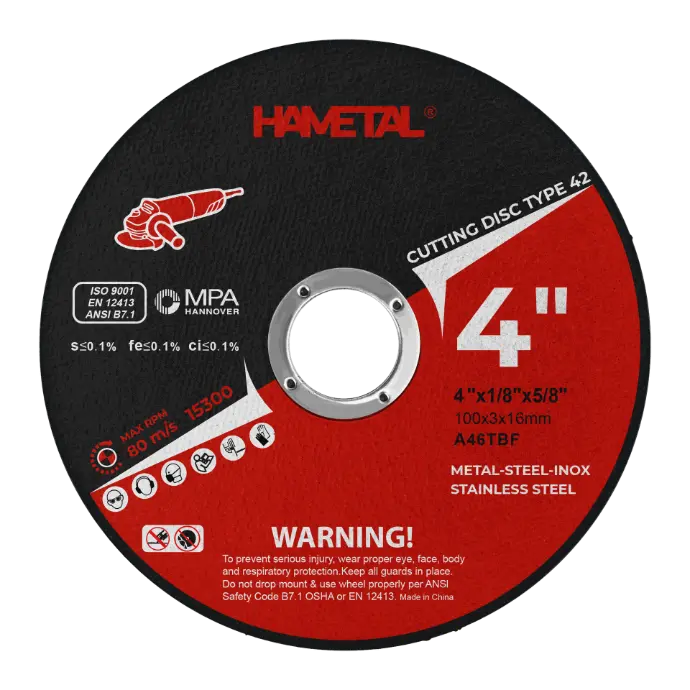
HAMETAL cutting discs
For separating metal using a disc approved for the material.
View product details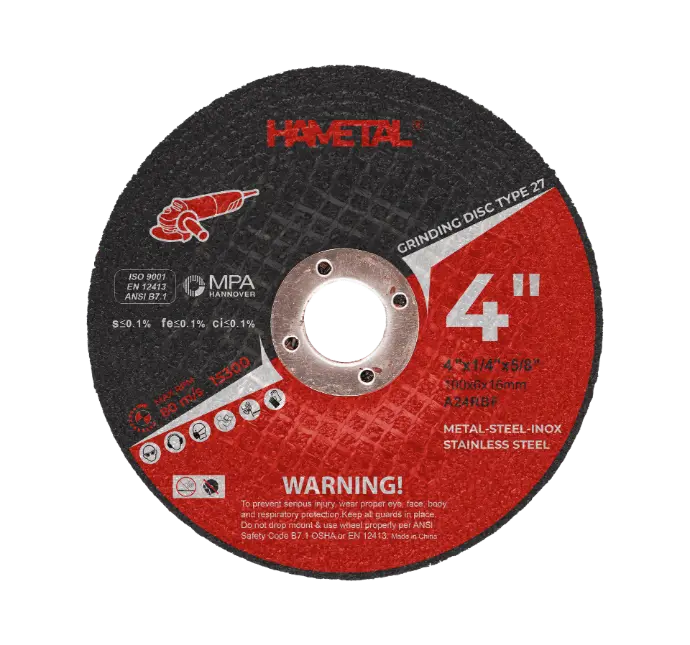
HAMETAL grinding discs
For stock removal and surface preparation as specified by the manufacturer.
View product details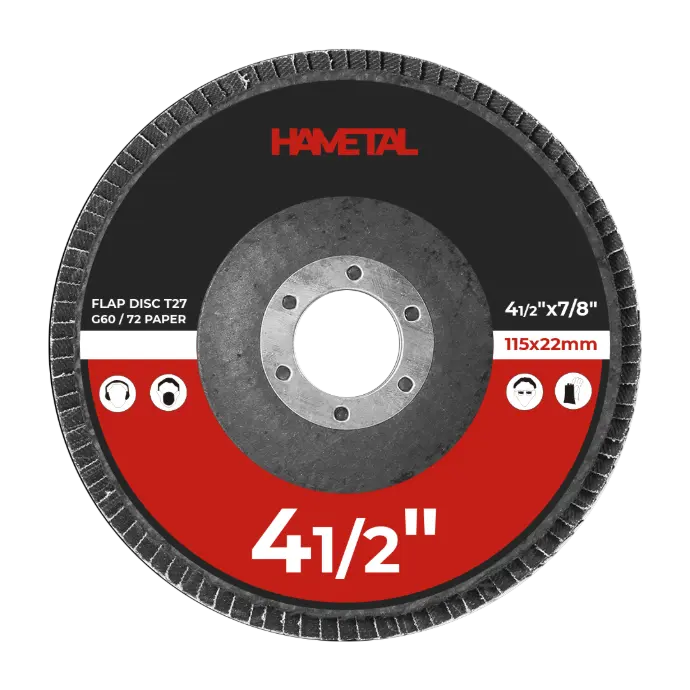
HAMETAL flap discs
For grinding and finishing with a grit suited to the required result.
View product detailsInformation to include in your RFQ
- Job, material, and machine type or model.
- Diameter, bore, and specified thickness or grit where applicable.
- Current product label or product number when ordering the same item.
- Quantity, ordering unit and delivery location in Saudi Arabia.
If a specification is missing, send the available information and a clear image so the options can be checked before the order is agreed.
Request a quotation from HAMQuestions before ordering
Are discs of the same size interchangeable?
No. Operation, material rating, bore and maximum speed can differ even when the diameter matches.
Can a cutting disc replace a grinding disc?
Do not use it for side grinding unless the manufacturer expressly permits that operation for the product.
Does this guide replace operating instructions?
No. Product selection requires checking the specification; operation requires the manufacturer’s instructions, training and the workplace’s approved safety procedures.
Useful links
- HAM abrasive products
- Industrial angle grinders
- Abrasive handling guidance — KLINGSPOR
- Flap disc guide — Norton Abrasives
General references do not establish a specification or approval for a particular HAMETAL product; its own data and manufacturer instructions govern compatibility.